Community Solutions for the School Budget Crisis
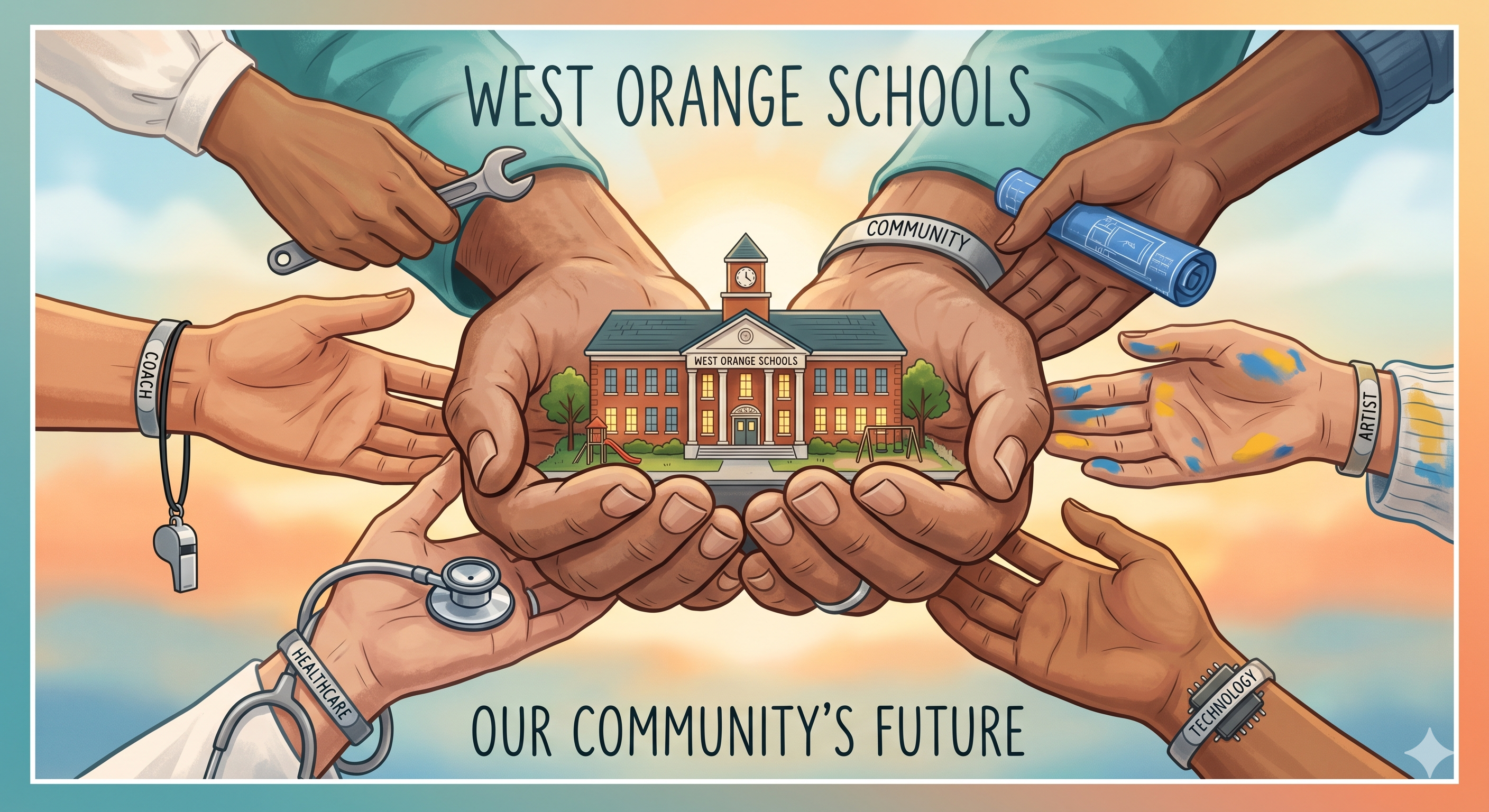
A Resource-Optimized Model for District Stability Bridging the Budget Gap through Community-Led Infrastructure & Shared Service Grants
This site is the West Orange (NJ) case study for The Front State — a generational project to build the coordination layer ordinary communities are missing. The proposals here are an early working test of the approach.
How You Can Help Right Now We are looking for people willing to lead or join working groups focused on these specific modules. If you have expertise in healthcare, finance, grant writing, or community organizing—or just want to help build this out—please reach out!
Contact:
- volunteer@frontstate.org — to help, contribute, or join a working group
- schools@frontstate.org — general inquiries, press, or other districts curious about this case study
Start here: The Action Plan — the three-prong strategy we’re organizing around now, post-April 20: tax bridge, community effort, and long-term structural cost reduction. For the original whitepaper prepared for the April 20 board meeting, see the Executive Summary. The document index below navigates all the details.
This site was built by one time-restrained nerd dad with three young kids, assisted responsibly by AI writing, image generation, and research tools. The ideas are human; the legwork was accelerated. That’s kind of the point: if one person can produce this with modern tools, imagine what a whole organized community could do? (More about this site)
The Action Plan: Flatten the Curve
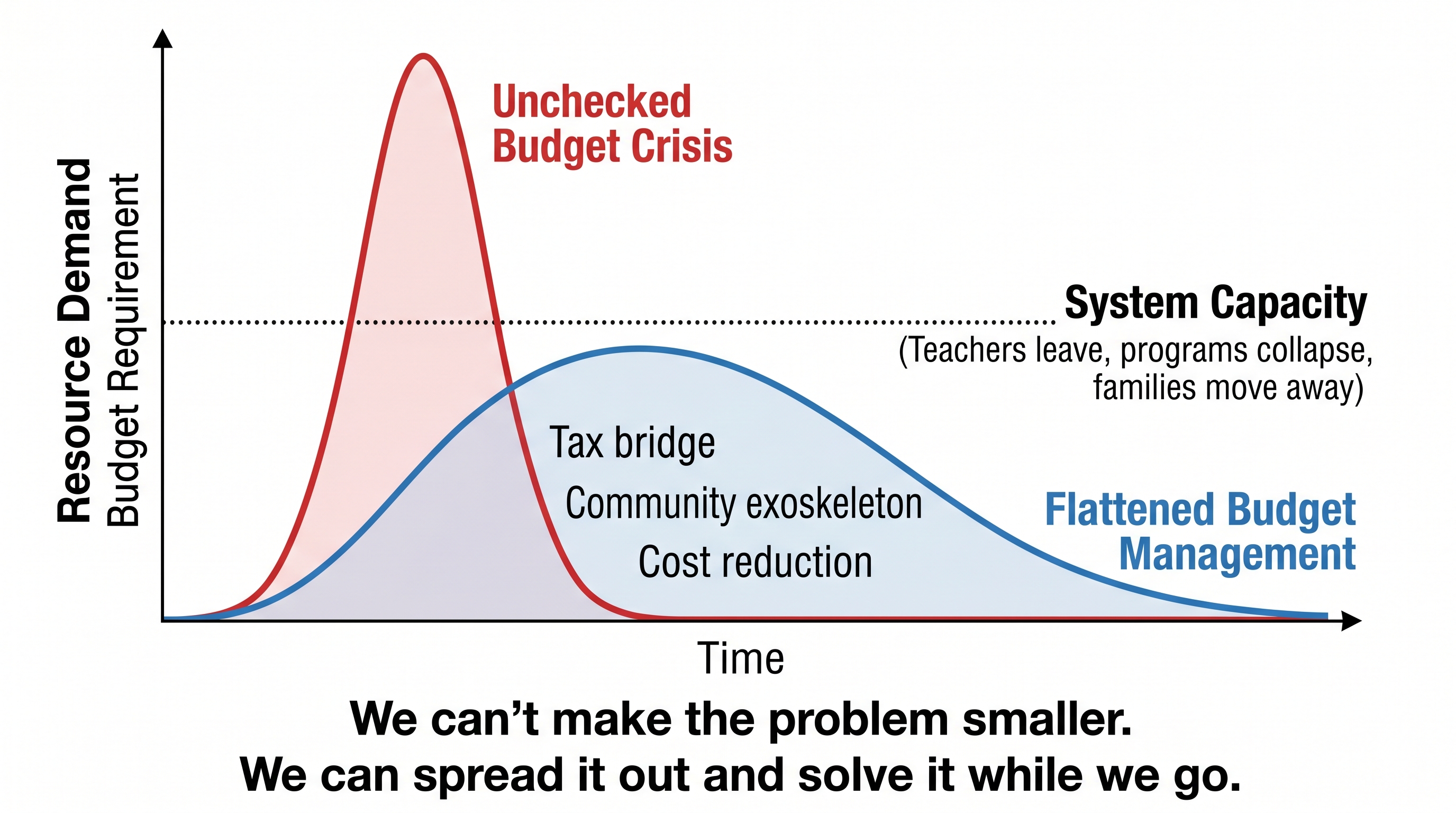
During early COVID, the entire country mobilized to “flatten the curve” - not to cure the disease, but to keep hospitals from collapsing while better solutions were developed. Nobody thought their personal mask saved the ICU. But collectively, the small actions bought time for the big ones.
We need a local version of the same thing. Our school system is the overwhelmed hospital. The $14M deficit is the spike in cases. And the community is the population that can flatten the curve - not by solving the underlying funding crisis overnight, but by absorbing what we can, reducing costs where we’re able, and buying time for structural fixes to take effect.
What can you do for West Orange?
This isn’t just about board meetings. It’s about the doctor’s office (pushing for direct primary care relationships), the accountant’s desk (identifying grant opportunities), the sports field (leagues absorbing athletic programs), the PTA meeting (transparent fundraising), and the kitchen table (deciding to sponsor a neighbor’s tax increase or PTA membership because you can and they can’t).
The three-prong plan in detail:
- Right now - targeted tax increases using NJ’s health insurance exception to the 2% cap, with community “sponsor a neighbor” programs to protect those who can’t absorb it
- This year and ongoing - the community starts preparing and building: PTA fundraising, volunteer recruitment, sports league coordination, improving governance and budget transparency - working with the district to execute (the whitepaper modules below)
- Multi-year structural - deeper changes the district executes with community research: healthcare restructuring, energy savings, cooperative purchasing, regulatory tools (The Bigger Picture)
Each prong justifies the others. Taxes buy time. Community effort justifies the taxes. Cost reduction justifies reducing the taxes over time. None works alone. All three together, with a timeline.
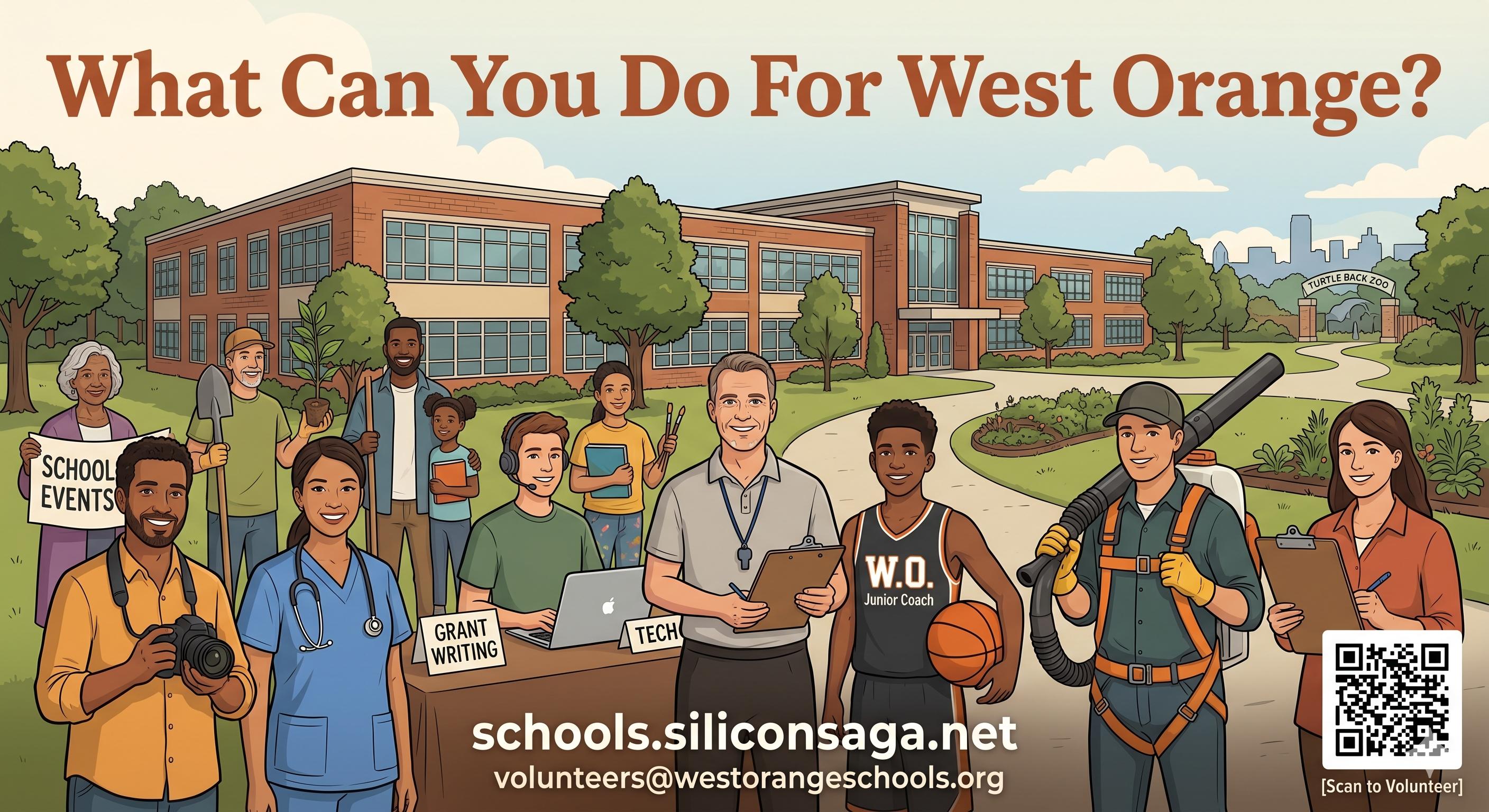
Note: The email and QR code shown in the image above are placeholders and not active. To get involved, contact volunteer@frontstate.org
After the April 20 Board Meeting
Close to a thousand residents packed an auditorium for over four hours of public comment. Dozens spoke. The board listened, said some words, passed routine business, and gaveled out past midnight.
Here’s what became clear: multiple groups are correct about incompatible things.
- The board is correct that the numbers don’t add up under the current funding formula
- The teachers’ union is correct that outsourcing and two-tier contracts devalue the people who do the actual work
- The parents are correct that cutting programs and paras hurts kids
- The state-level advocates are correct that the funding formula itself is structurally broken
- The community is correct that there are creative options that haven’t been explored
These aren’t contradictions - they’re symptoms of the same underlying problem. Systems like healthcare, insurance, and state education funding are fundamentally unsustainable in their current form, and local districts absorb the damage. Meanwhile at the state level, NJ generates $1.5 billion less in revenue than it needs to cover expenses, corporate tax revenue is declining by $235M, and school aid increases (3.6%) can’t keep pace with per-pupil cost increases (7-20%). The squeeze comes from above and below simultaneously.
But here’s what’s worse: both dominant paths forward lead to system collapse.
- The board’s current plan - cut positions, outsource paras, shrinkflate programs - breaks the system because you can’t easily rebuild a teaching workforce once it’s gone. The institutional knowledge, the relationships, the people who chose education because they care - once lost, they don’t come back at the same salary.
- The union’s position - maintain all positions and compensation levels - is financially unsustainable when costs keep rising faster than revenue. You can’t conjure money that doesn’t exist.
To the board’s credit, they presented evidence at the meeting that they’ve already explored some of the health insurance alternatives covered in our Module 5 - including switching plans a few years ago to avoid even worse outcomes. But the alternatives themselves are struggling: the NJ State Employee Health Benefits Program (SEHBP) is recommending a 29.7% premium increase for 2026, driven by $254 million in cost overruns in 2025 and the explosion of GLP-1 drug costs (Ozempic, Wegovy, Mounjaro). Healthier employer groups are leaving the state plan, concentrating risk and driving costs higher for those who stay. There may not be a good insurance option left - which is itself evidence that the underlying healthcare system is broken at a level no school board can fix alone.
Neither side is wrong about the other’s plan being unworkable. Both are right. And that’s the problem. The two sides are locked in escalating conflict, each convinced the other is the obstacle, while the actual problem - unsustainable underlying systems - goes unaddressed. Sound familiar? It’s the national two-party deadlock playing out at the local level.
A third path can’t get enough oxygen while everyone is trapped in that binary argument. We can’t recruit volunteers, organize working groups, or build community capacity while the room is consumed by a fight between two approaches that both lead to the same cliff.
The first step is making peace - not agreement, but enough mutual recognition that neither current path works - so that a third approach can start to grow.
That starts with fixing the process. A thousand people showed up and the best we could do was hours of three-minute soundbites, heckling, and a polite wall behind a dais. Nobody workshopped anything. Nobody broke into groups. Nobody left with action items. The meeting format is designed for compliance, not collaboration.
What if instead of a marathon of monologues, the community could split into working groups - each with access to the relevant budget data, each focused on one problem area, each producing a concrete recommendation? What if the board meeting was the end of that process, not the only venue for it?
That’s what this whitepaper proposes. Not just specific cost-avoidance ideas, but a fundamentally different way for a community and its school district to work together. The proposals below are a starting point. The real ask is: let’s build a better process so the next meeting doesn’t look like the last one. That is democracy - even if it starts small and vague.
If you were at the meeting and want to help turn any of this into action - or if you have expertise in healthcare, insurance, school finance, grant writing, or community organizing - please reach out: cervator@gmail.com
Document Index
Overview
| Document | Type | Print? |
|---|---|---|
| Executive Summary | Whitepaper | Yes |
Cost-Avoidance Modules
| Document | Impact | Print? |
|---|---|---|
| Instructional Bridge Grant – PTA fund to save Art & Library | High | Yes |
| Open Image Project – Replace Lifetouch, reclaim revenue & data | Medium-High | Yes |
| Community Maintenance Layer – Volunteer groundskeeping SLA | Low-Med $ / High proof | Yes |
| Paraprofessional Retention Audit – Hidden costs of outsourcing special ed | Very High | Yes |
| Health Insurance Transparency – Broker conflicts, Perth Amboy precedent, SHBP | Very High | Yes |
| Open Governance Pilot – Async governance, meetings as Sprint Reviews | Very High (long-term) | Yes |
Tools & Delivery
| Document | Print? |
|---|---|
| RFI Templates – Ready-to-file vendor & broker disclosure requests | Yes |
| The Speech + Print Guide – 3-minute address, what to print, assembly tips | Reference |
Additional Cost-Avoidance Modules
| Document | Impact | Print? |
|---|---|---|
| Energy & Facilities – Solar PPAs ($18M Piscataway), LED, audits | High | Optional |
| Cooperative Purchasing & Shared Services – Pooled buying, DCA SHARE grants | Medium | Optional |
| Community Grant Writing Corps – Volunteer grant team as revenue pipeline | High | Yes |
| Student-Led Projects – Dual educational and cost-saving value | Medium | Optional |
| Regulatory Leverage Points – Best Practices, banked cap, NJQSAC, surplus | Very High | Yes |
Community Partnerships & Multi-Organization Model
| Document | Impact | Print? |
|---|---|---|
| Open Budget & Participatory Finance – OpenCollective, PB, budget viz | Very High | Yes |
| PTA Coordination Infrastructure – Skill inventories, proposals, commitment tracking | Very High (long-term) | Optional |
| The PTA as Community Operating System – OpenCollective, directed giving, Palo Alto model | Very High | Site only |
| Community Sports & Athletics Partnerships – League partnerships, junior coaches, multi-org model | High | Medium-High |
Technical Design Plans
For platform builders – developers, data volunteers, and technical contributors.
| Document | Implements |
|---|---|
| District Budget Visualization – Interactive CAFR explorer, D3.js, GitHub Pages | Module 12 |
Reference
| Document | Purpose |
|---|---|
| References & Source Links – Verified URLs, statutes, precedents, news coverage | All modules |
The Multi-Organization Model
| Organization | Contributes |
|---|---|
| PTA | Fundraising, enrichment, photography, grant writing |
| Sports leagues | Athletics, coaching, equipment, insurance |
| Student volunteers | Peer tutoring, junior coaching, tech support, media |
| Local businesses | Enrichment instruction, sponsorship, equipment |
| Community groups | Grounds maintenance, neighborhood coordination |
Two Sides of the Same Problem
The district’s budget crisis has two dimensions:
The state-level problem: NJ’s funding formula requires local contributions to grow faster than the 2% tax cap allows. This creates a structural deficit that recurs every year regardless of local decisions. West Orange Parents for Education (WOPE) is a parent advocacy group focused on this angle – mobilizing residents to push for state formula reform and legislative action. Their work is essential because without state-level change, the crisis repeats annually.
The local problem: Regardless of what happens in Trenton, the community has untapped capacity to help right now. This site focuses entirely on what’s possible locally – community organizations absorbing functions, transparent fundraising, volunteer coordination, and regulatory tools the district may not be fully using.
Both efforts are needed. State reform addresses the root cause; local action addresses the immediate crisis. They complement each other. The fact that both exist independently – and that many residents may not know about the other – is itself an illustration of why better coordination and open process matters.
How to Use This Package
For the board meeting (printed): See the Print Guide for assembly order, copy counts, and tips.
For PTA leadership: Start with Executive Summary then Modules 14-16.
For sports league leadership: Start with Community Sports then Coordination.
For developers: Start with Technical Design docs and References.